
 Image 1 of 1
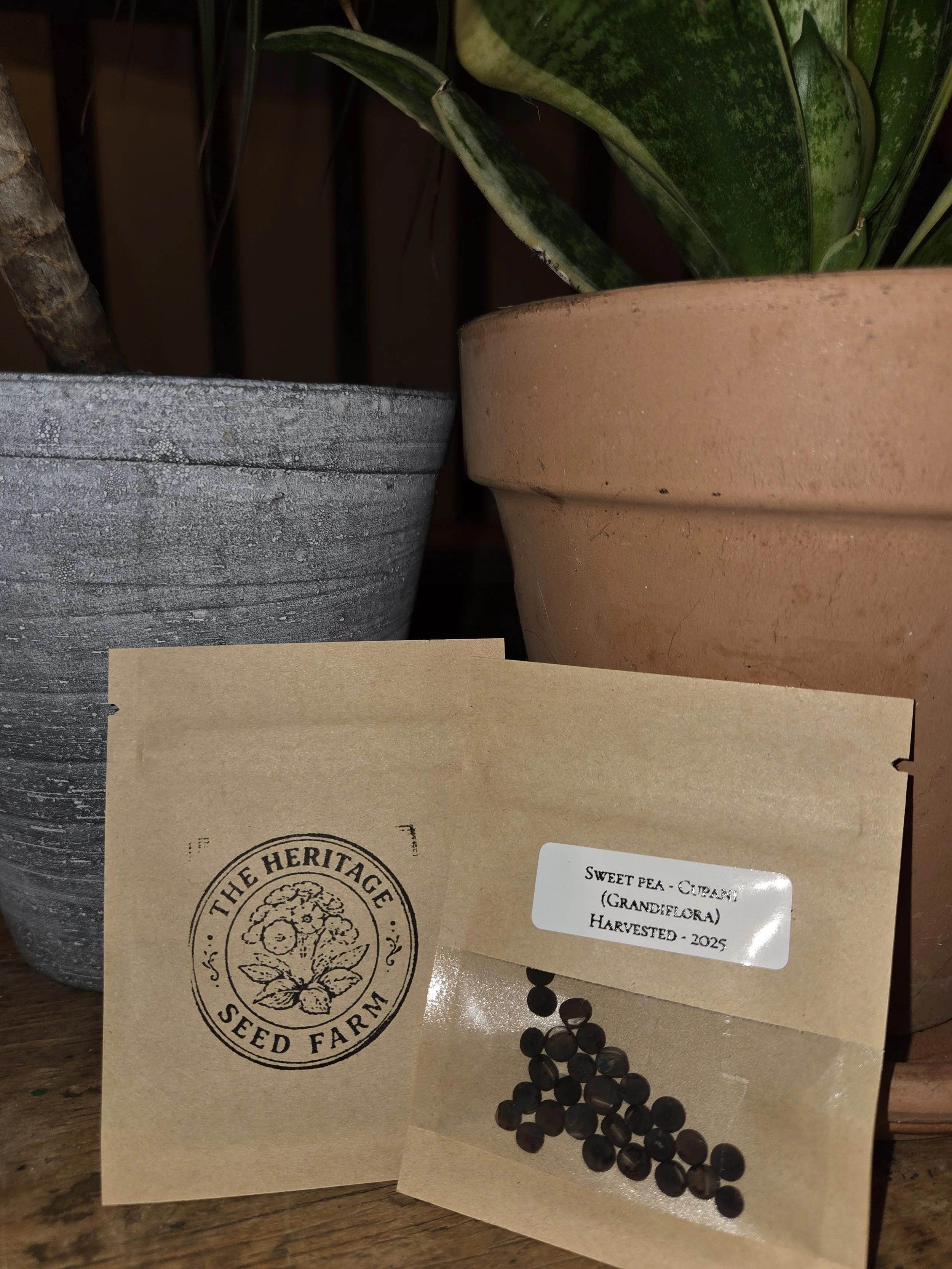
Beautiful two-toned blooms with deep maroon-purple standards (top petals) and velvety violet or navy-blue wings. It is renowned for an extremely strong, intense, and captivating perfume, often described as having notes of orange blossom and honey. A stonger fragrance than its modern counterparts.
Recognised as the original wild ancestor of all modern cultivars, the plant was first recorded in 1695 by a Franciscan monk and botanist working in Sicily. In 1699, Father Cupani sent seeds to Dr. Robert Uvedale, a schoolmaster in Enfield, Middlesex, England.
Cupani was the first sweet pea to be cultivated in the England, serving as the genetic foundation for massive breeding efforts in the late 19th century; particularly those of Henry Eckford. It was crucial in early studies of genetic inheritance (specifically, flower color and linkage) by pioneer geneticists, interestingly there is no true yellow sweet pea in existence!
Beautiful two-toned blooms with deep maroon-purple standards (top petals) and velvety violet or navy-blue wings. It is renowned for an extremely strong, intense, and captivating perfume, often described as having notes of orange blossom and honey. A stonger fragrance than its modern counterparts.
Recognised as the original wild ancestor of all modern cultivars, the plant was first recorded in 1695 by a Franciscan monk and botanist working in Sicily. In 1699, Father Cupani sent seeds to Dr. Robert Uvedale, a schoolmaster in Enfield, Middlesex, England.
Cupani was the first sweet pea to be cultivated in the England, serving as the genetic foundation for massive breeding efforts in the late 19th century; particularly those of Henry Eckford. It was crucial in early studies of genetic inheritance (specifically, flower color and linkage) by pioneer geneticists, interestingly there is no true yellow sweet pea in existence!