
 Image 1 of 1
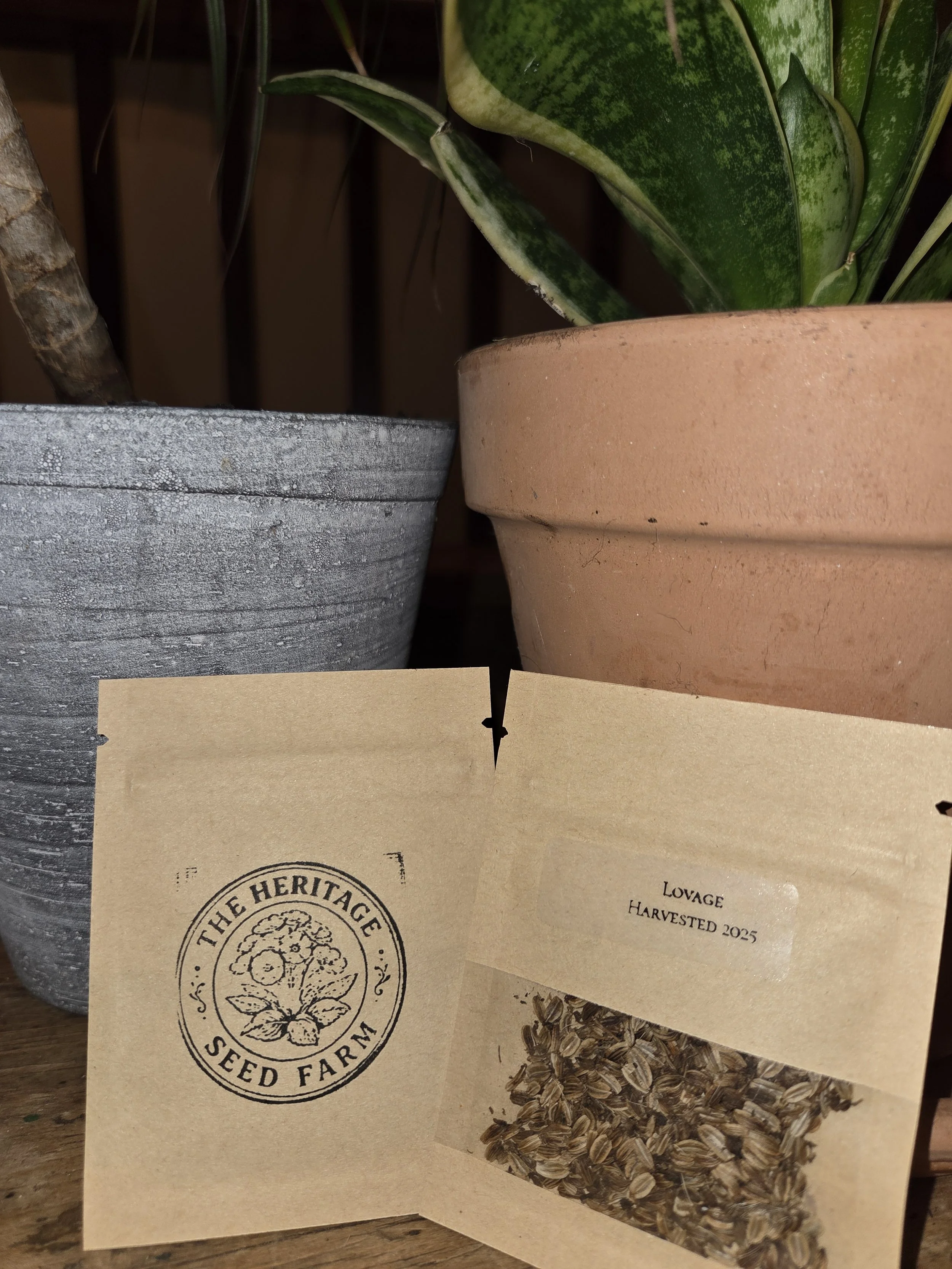
A hardy, statuesque herbaceous perennial, known for its intense, celery-like flavor with notes of parsley and aniseed. A plant beloved by pollinators and much underused in modern kitchens.
Native to the ancient Mediterranean, it was introduced to Britain by Roman settlers for culinary, medicinal, and even deodorant purposes. Throughout ancient and medieval Europe it was widely grown, especially in monastery gardens, valued as a digestive aid and diuretic. Used to ease aches, freshen breath and body odor, clear skin spots and freckles, and even placed in shoes to relieve tired feet.
Rich in folklore and featured in medieval love potions; its cultural appeal endured well into the 19th century, when Queen Victoria was said to carry candied lovage seeds in her pockets.
A staple garden herb used for medicinal teas and cooking. Young leaves are favored for salads, stocks, soups, stews, potatoes, and as a salt substitute, while the hollow stems can be cooked like celery or candied. Its bold flavour means a little goes a very long way in cooking.
A hardy, statuesque herbaceous perennial, known for its intense, celery-like flavor with notes of parsley and aniseed. A plant beloved by pollinators and much underused in modern kitchens.
Native to the ancient Mediterranean, it was introduced to Britain by Roman settlers for culinary, medicinal, and even deodorant purposes. Throughout ancient and medieval Europe it was widely grown, especially in monastery gardens, valued as a digestive aid and diuretic. Used to ease aches, freshen breath and body odor, clear skin spots and freckles, and even placed in shoes to relieve tired feet.
Rich in folklore and featured in medieval love potions; its cultural appeal endured well into the 19th century, when Queen Victoria was said to carry candied lovage seeds in her pockets.
A staple garden herb used for medicinal teas and cooking. Young leaves are favored for salads, stocks, soups, stews, potatoes, and as a salt substitute, while the hollow stems can be cooked like celery or candied. Its bold flavour means a little goes a very long way in cooking.