
 Image 1 of 4
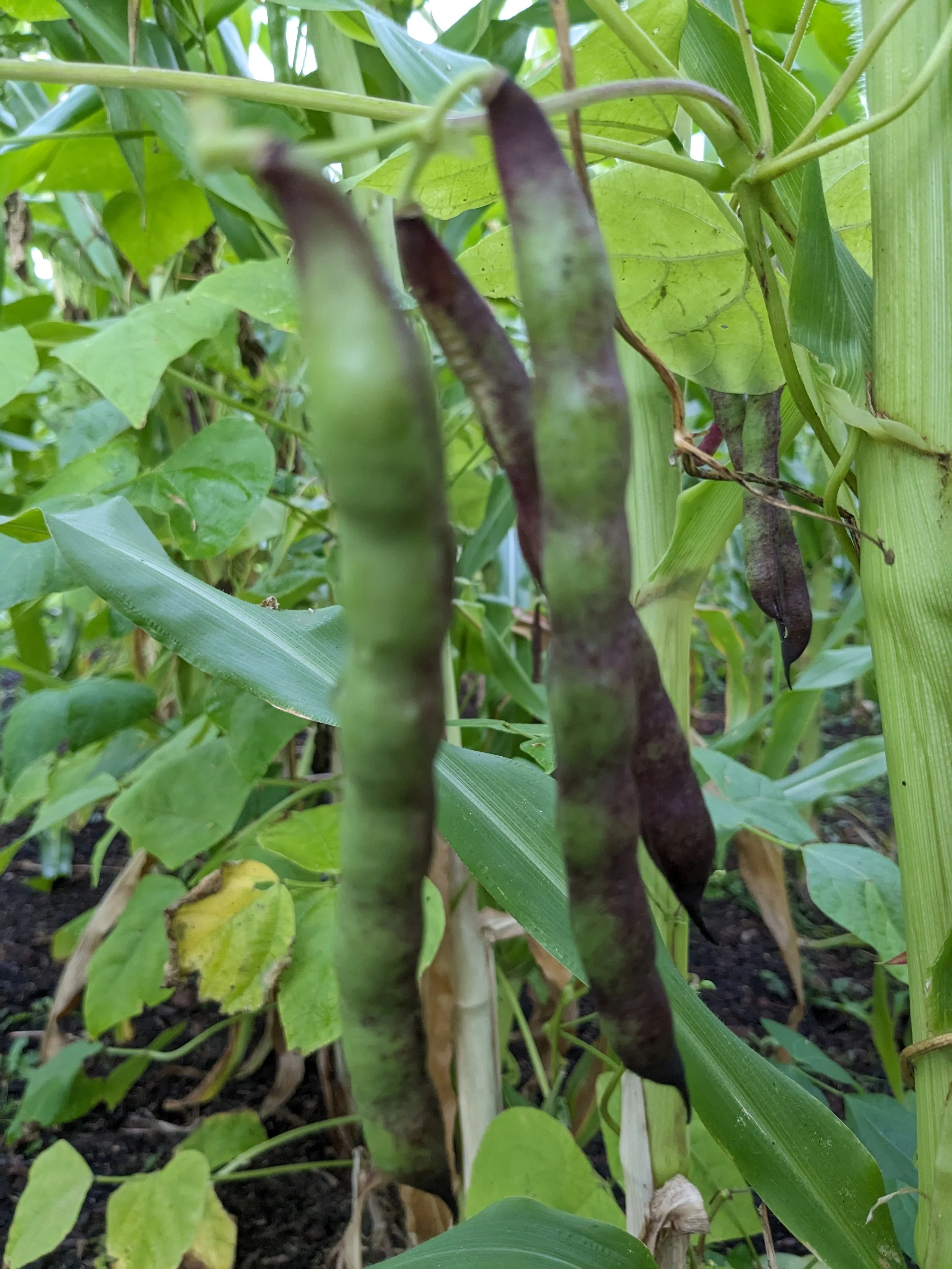 Image 2 of 4
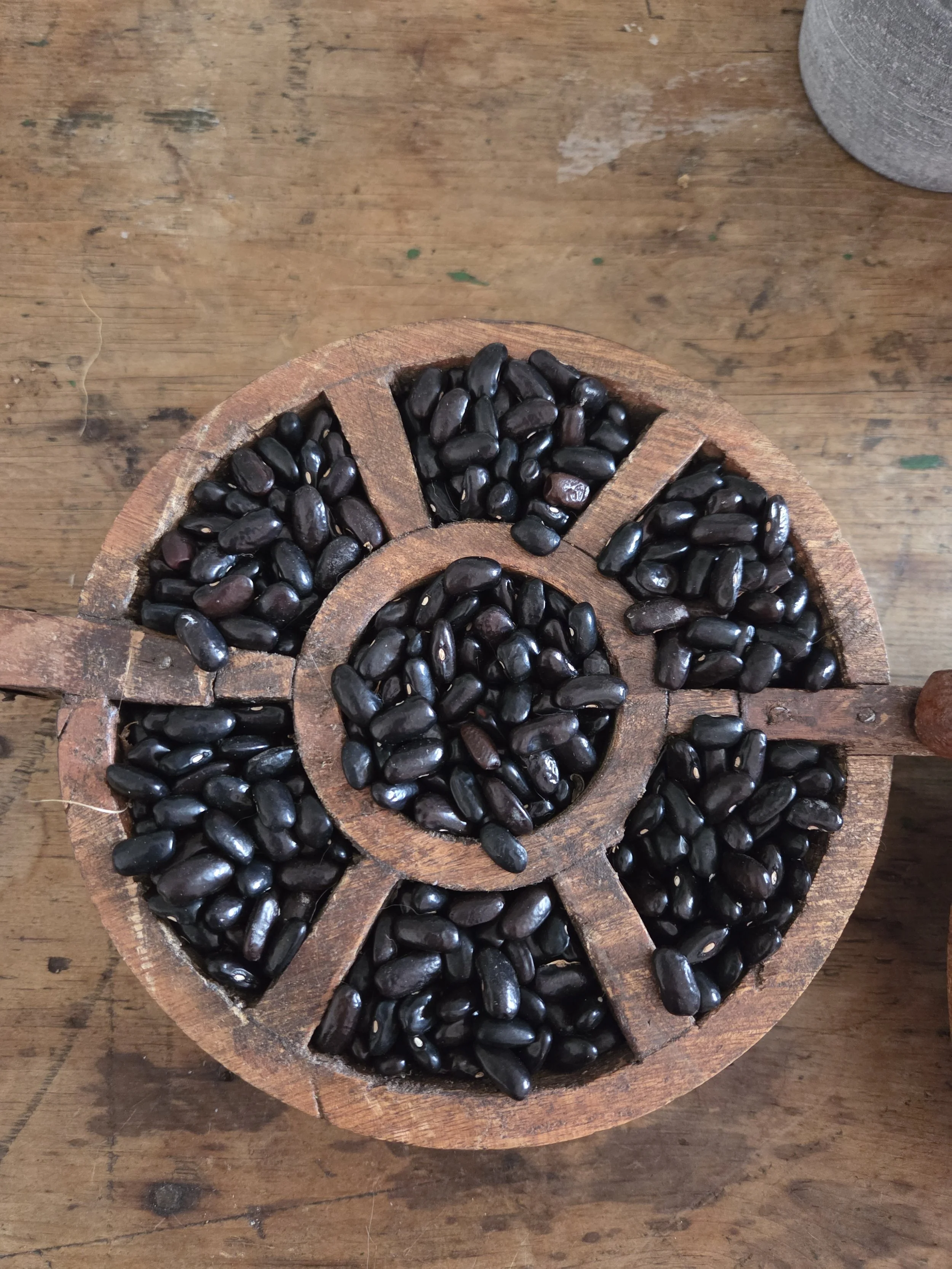 Image 3 of 4
 Image 4 of 4
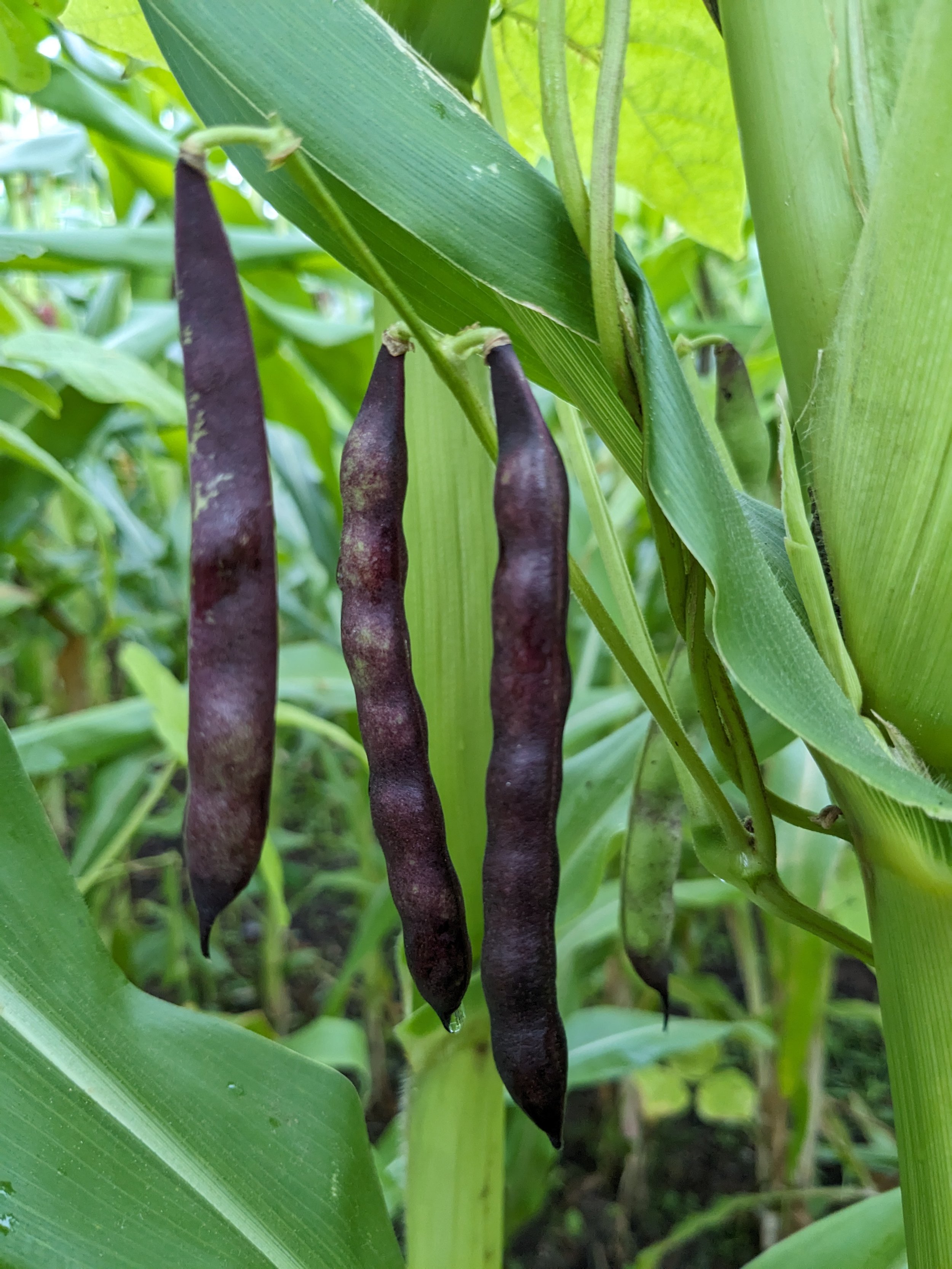
Cherokee Trail of Tears beans are a historic, hardy pole bean variety with shiny jet black beans. Vigorous, vining climbers that grow up to 8 feet. Green pods turn deep purple/black when mature. Use as green snap beans when young or allow to mature for dry black beans, known for their rich flavor in stews and soups. They are heat and humidity-tolerant, reaching maturity in 65–90 days.
Carried by the Cherokee people during the forced, 5,000-mile march of over 100,000 Native Americans from the south east to Oklahoma between 1830-1850.
In 1830 President Andrew Jackson Signed the The Indian Removal Act, an act for the forced removal of all Native Americans living east of the Mississippi River. Thousands of native peoples died from starvation, exposure and disease on the marches that ensued. This land grab was to make way for white settlers who wanted the richer more fertile lands of the Cherokee , primarily cotton production; expanding both the plantation system, and the slave labour used to work them.
The beans were maintained for over 140 years by the family of Dr. John Wyche, a Cherokee descendant and early member of Seed Savers Exchange, who shared them in the 1970s. Widely recognised for their cultural importance and fantastic flavour.
Cherokee Trail of Tears beans are a historic, hardy pole bean variety with shiny jet black beans. Vigorous, vining climbers that grow up to 8 feet. Green pods turn deep purple/black when mature. Use as green snap beans when young or allow to mature for dry black beans, known for their rich flavor in stews and soups. They are heat and humidity-tolerant, reaching maturity in 65–90 days.
Carried by the Cherokee people during the forced, 5,000-mile march of over 100,000 Native Americans from the south east to Oklahoma between 1830-1850.
In 1830 President Andrew Jackson Signed the The Indian Removal Act, an act for the forced removal of all Native Americans living east of the Mississippi River. Thousands of native peoples died from starvation, exposure and disease on the marches that ensued. This land grab was to make way for white settlers who wanted the richer more fertile lands of the Cherokee , primarily cotton production; expanding both the plantation system, and the slave labour used to work them.
The beans were maintained for over 140 years by the family of Dr. John Wyche, a Cherokee descendant and early member of Seed Savers Exchange, who shared them in the 1970s. Widely recognised for their cultural importance and fantastic flavour.