
 Image 1 of 1
A perennial plant native to europe and asia, the earliest recorded mention and use of comfrey (Symphytum officinale) dates back to approximately 400 BC in Ancient Greece. It was utilized by early Greek and Roman physicians, including Dioscorides and Pliny the Elder, who recommended it for healing wounds, sealing tissues, and repairing broken bones.
Historically known as “Knitbone" or "Boneset" it has been used for thousands of years as a poultice on broken bones, sprains, and bruises. This is due to its high content of allantoin (a compound that stimulates cell proliferation). Army medics from the time of Alexander the Great through to World War I relied on comfrey to treat wounds. It has also been used internally to treat gastric ulcers, diarrhea, and bronchial problems.
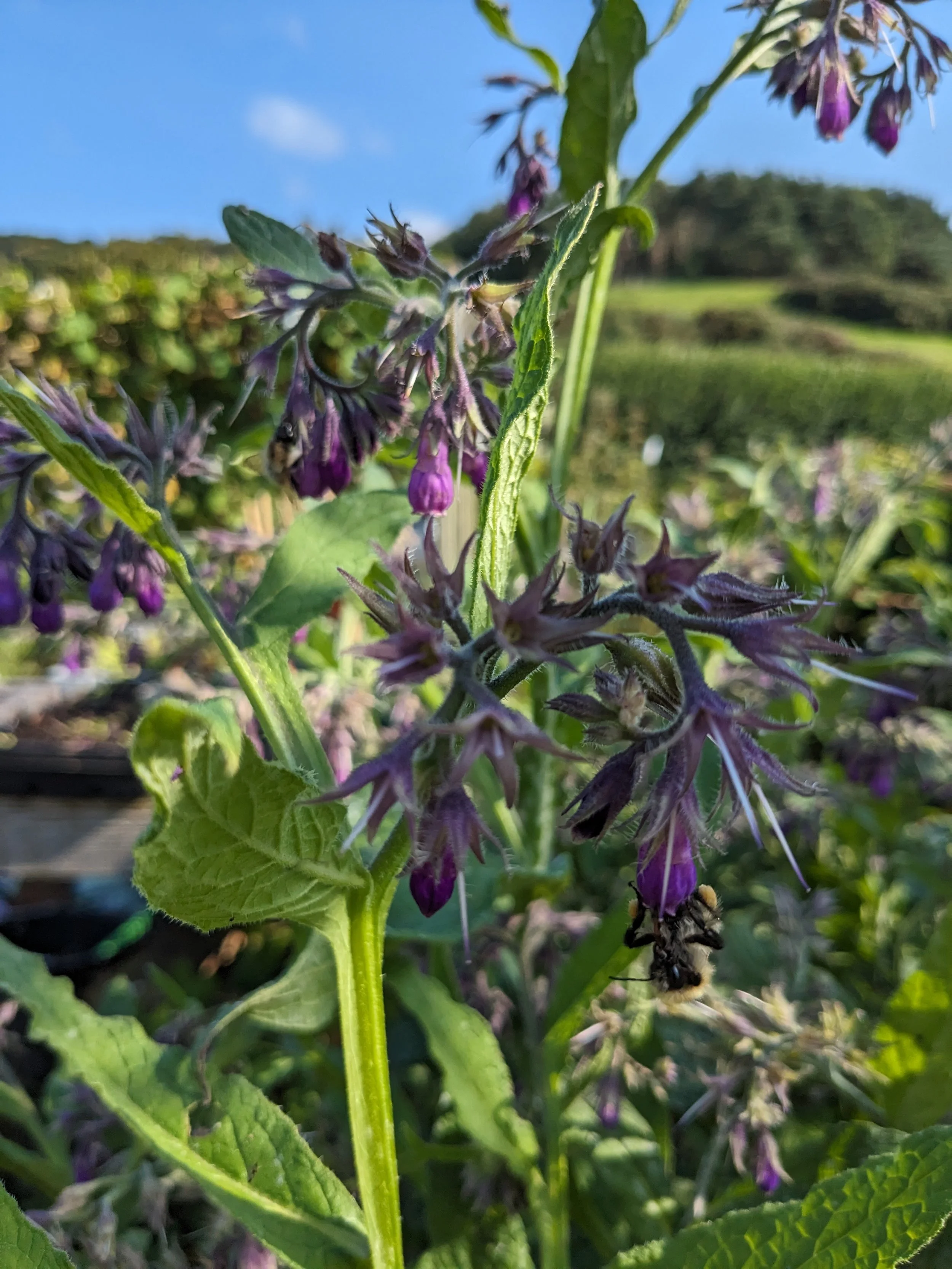
Comfrey is clump forming with deep roots, boasting large hairy leaves, and a profusion of purple or sometimes pink, bell shaped flowers. It makes a wonderful garden plant and can be used for; erosion control, companion planting, green fertiliser, mulch, food for pollinators and ground cover. The stems can even be used to make natural twine!
A perennial plant native to europe and asia, the earliest recorded mention and use of comfrey (Symphytum officinale) dates back to approximately 400 BC in Ancient Greece. It was utilized by early Greek and Roman physicians, including Dioscorides and Pliny the Elder, who recommended it for healing wounds, sealing tissues, and repairing broken bones.
Historically known as “Knitbone" or "Boneset" it has been used for thousands of years as a poultice on broken bones, sprains, and bruises. This is due to its high content of allantoin (a compound that stimulates cell proliferation). Army medics from the time of Alexander the Great through to World War I relied on comfrey to treat wounds. It has also been used internally to treat gastric ulcers, diarrhea, and bronchial problems.
Comfrey is clump forming with deep roots, boasting large hairy leaves, and a profusion of purple or sometimes pink, bell shaped flowers. It makes a wonderful garden plant and can be used for; erosion control, companion planting, green fertiliser, mulch, food for pollinators and ground cover. The stems can even be used to make natural twine!