
 Image 1 of 2
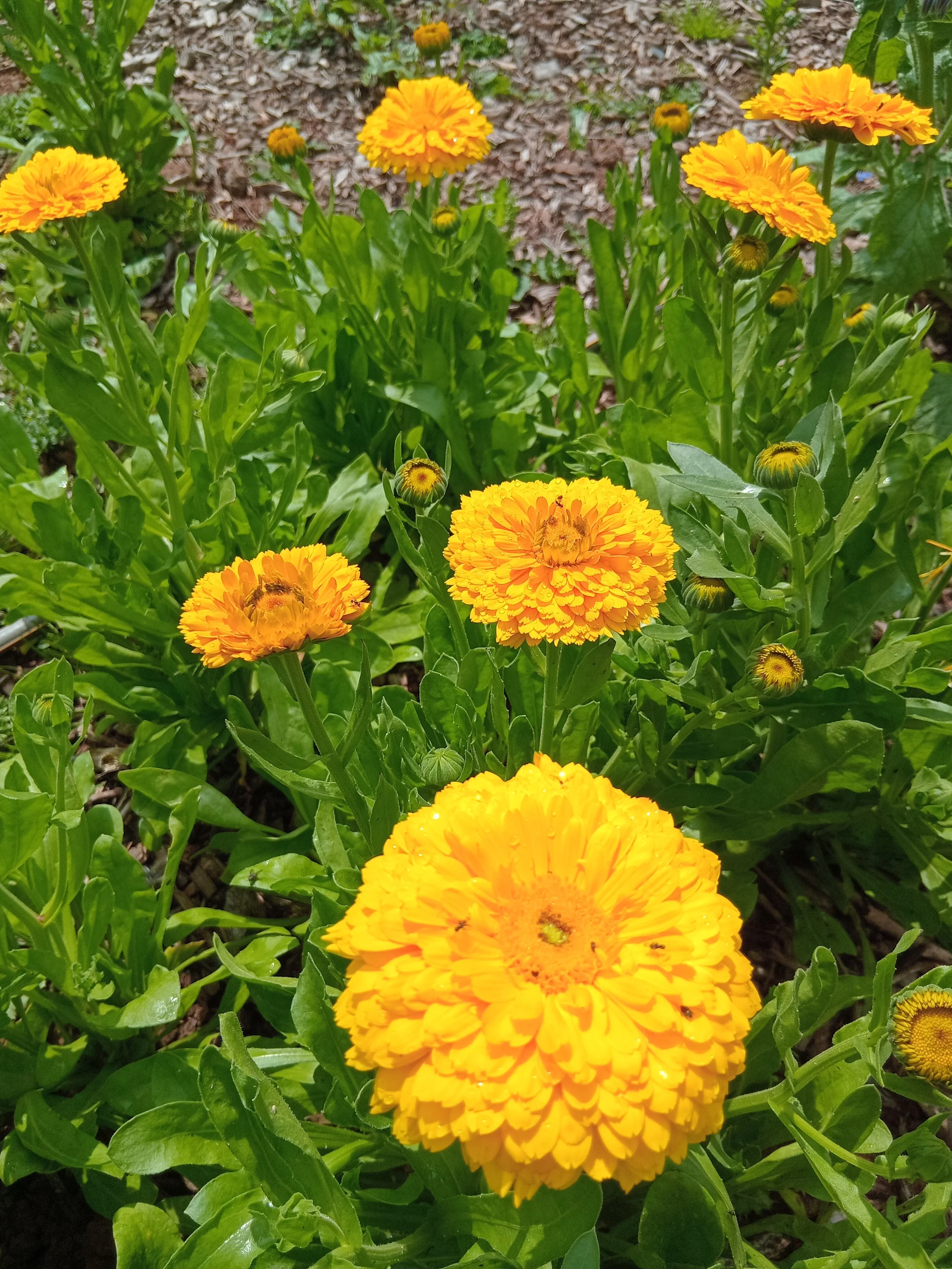 Image 2 of 2
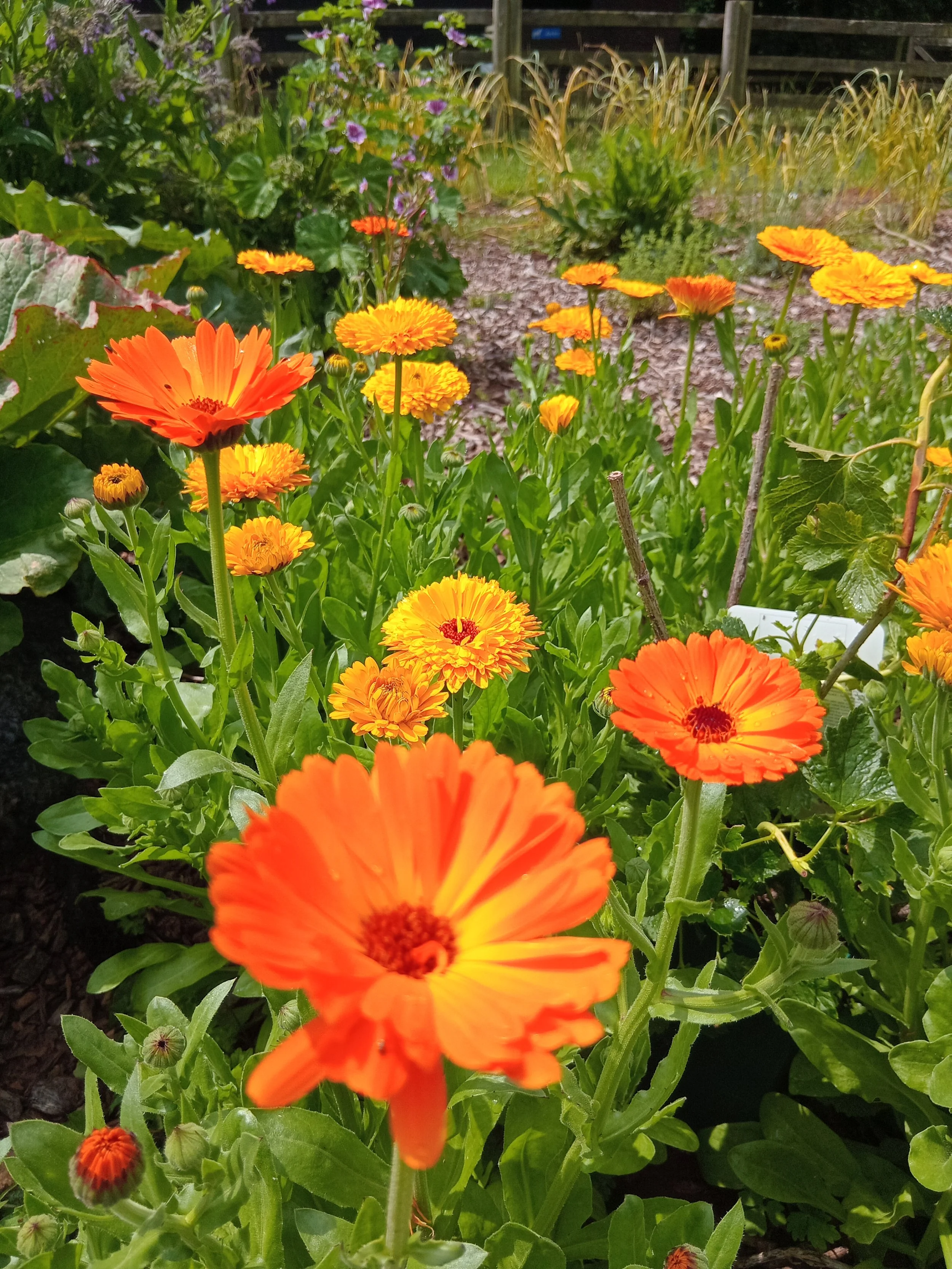
A happy, hardy annual with bright, open, orange/yellow flowers of all shapes and sizes. An excellent pollinator, self seeder and companion plant, bushy habit growing to 60/ 80cm.
An ancient plant with a rich and diverse history in European, Egyptian, and Indian cultures. Used in garlands, cooking and medicine it has many names; often called pot marigold or poor mans saffron, stemming from its common historical use to enhance the colour, and flavour, of soups and stews.
In Christian legend one of the names for the flower is ‘Mary’s gold’ because while the Holy Family were fleeing to Egypt, Mary’s purse was stolen. When the thieves opened it all they found were golden petals instead of coins. Early Christians have since placed the flowers around statues of Mary as offerings in symbolising coins. By the Middle Ages, this story was so popular that the plant was a staple in "Mary Gardens"—cultivated, sacred gardens dedicated to the Virgin Mary.
Used for its anti inflammatory, anti bacterial and anti fungal properties; particularly valued in skincare. The petals can also be used to produce striking dyes. Calendula is still commonly found in herbal medicine and makes an excellent poultice, oil, tea or tincture.
A happy, hardy annual with bright, open, orange/yellow flowers of all shapes and sizes. An excellent pollinator, self seeder and companion plant, bushy habit growing to 60/ 80cm.
An ancient plant with a rich and diverse history in European, Egyptian, and Indian cultures. Used in garlands, cooking and medicine it has many names; often called pot marigold or poor mans saffron, stemming from its common historical use to enhance the colour, and flavour, of soups and stews.
In Christian legend one of the names for the flower is ‘Mary’s gold’ because while the Holy Family were fleeing to Egypt, Mary’s purse was stolen. When the thieves opened it all they found were golden petals instead of coins. Early Christians have since placed the flowers around statues of Mary as offerings in symbolising coins. By the Middle Ages, this story was so popular that the plant was a staple in "Mary Gardens"—cultivated, sacred gardens dedicated to the Virgin Mary.
Used for its anti inflammatory, anti bacterial and anti fungal properties; particularly valued in skincare. The petals can also be used to produce striking dyes. Calendula is still commonly found in herbal medicine and makes an excellent poultice, oil, tea or tincture.