
 Image 1 of 2
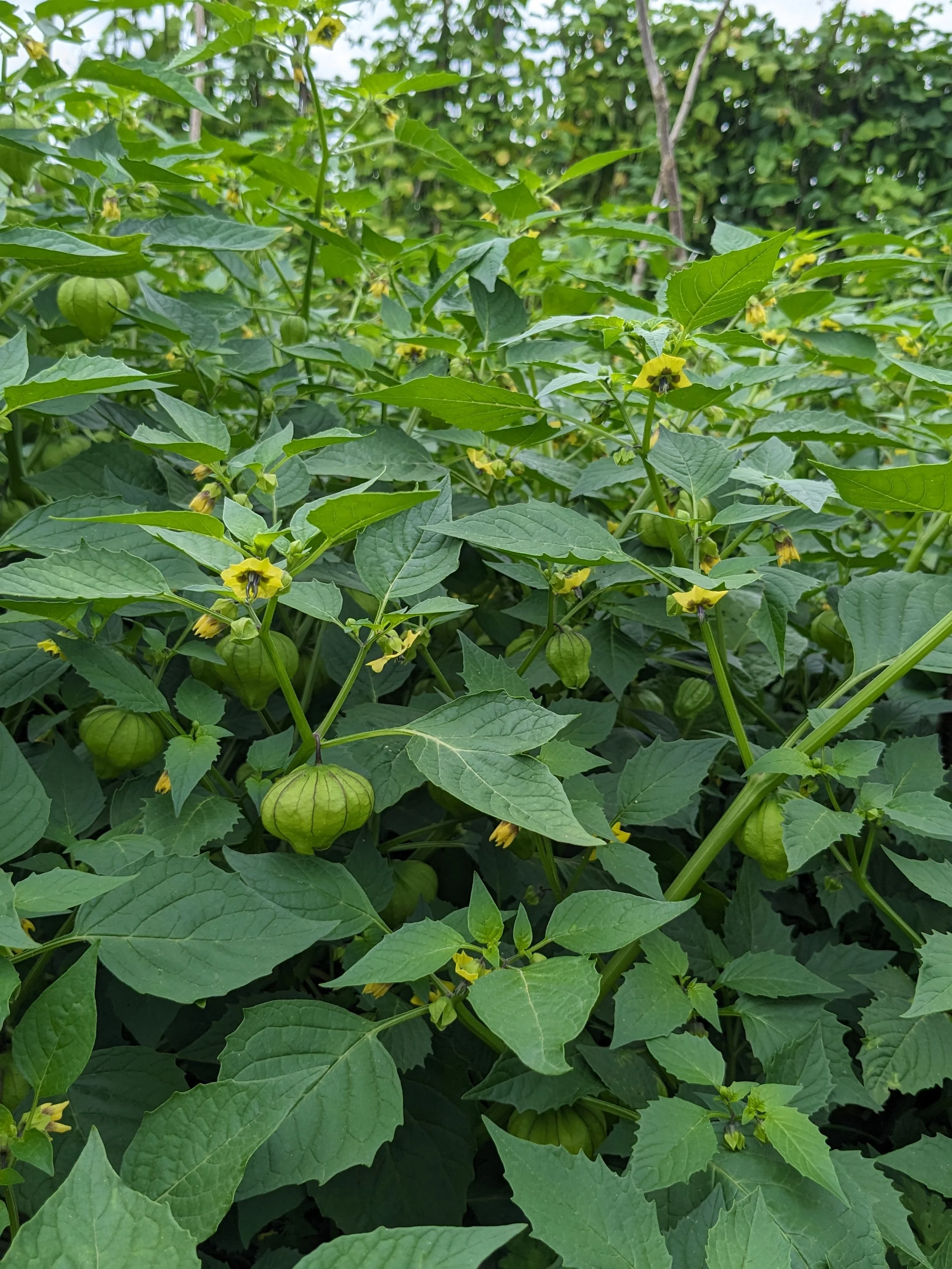 Image 2 of 2
Husk-covered members of the nightshade family, that were domesticated by the Aztecs over 2,000 years ago and remain an essential ingredient in authentic salsa verde, making them a must-have crop for any true salsa enthusiast.
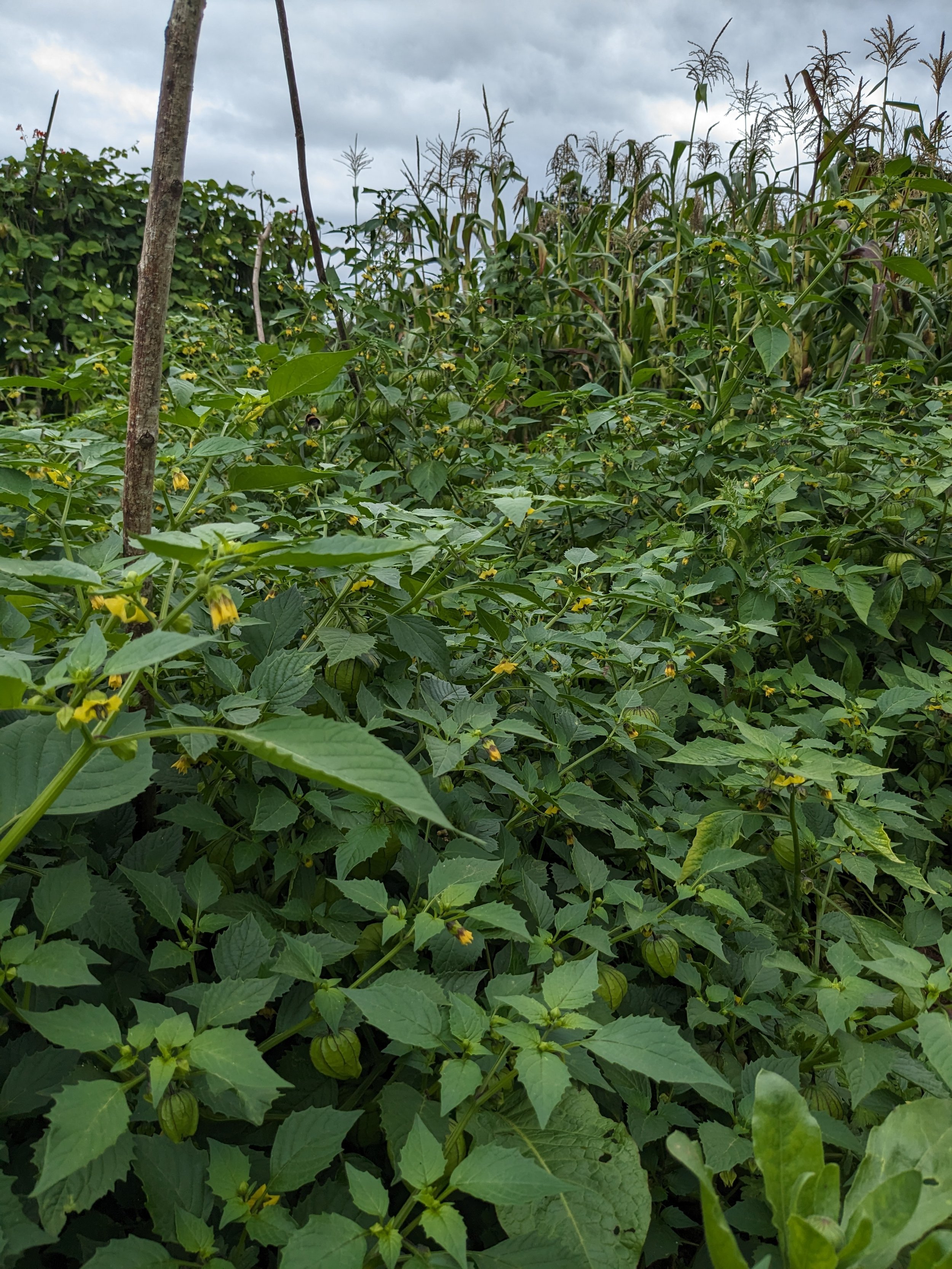
Unlike the large, commercial green tomatillos commonly found in supermarkets, semi-cultivated types such as tomatillos de milpa produce smaller fruits that are highly productive, often purple-blushed, and prized for their sharper, more intense flavour. The plants are vigorous, tomato-like annuals, producing small spherical fruits around 2.5–6 cm in diameter, each enclosed in a papery husk (calyx) that turns brown as the fruit matures. The fruits are rich in pectin, making them excellent not only for sauces—particularly cooked or raw salsa verde—but also for jams.
Although not traditionally grown in the UK, they perform surprisingly well here, often thriving in southern locations, outdoors in full sun; they are typically more vigorous than tomatoes and begin setting fruit from July.
As a self-incompatible species, at least two plants are required for successful pollination and fruit set. Seeds should be sown in March or April under glass or on a sunny windowsill and transplanted outside only after the risk of frost has passed. Plants grow to around 1m tall, can benefit from staking or support like tomatoes. Once planted, fantastic self seeder.
Husk-covered members of the nightshade family, that were domesticated by the Aztecs over 2,000 years ago and remain an essential ingredient in authentic salsa verde, making them a must-have crop for any true salsa enthusiast.
Unlike the large, commercial green tomatillos commonly found in supermarkets, semi-cultivated types such as tomatillos de milpa produce smaller fruits that are highly productive, often purple-blushed, and prized for their sharper, more intense flavour. The plants are vigorous, tomato-like annuals, producing small spherical fruits around 2.5–6 cm in diameter, each enclosed in a papery husk (calyx) that turns brown as the fruit matures. The fruits are rich in pectin, making them excellent not only for sauces—particularly cooked or raw salsa verde—but also for jams.
Although not traditionally grown in the UK, they perform surprisingly well here, often thriving in southern locations, outdoors in full sun; they are typically more vigorous than tomatoes and begin setting fruit from July.
As a self-incompatible species, at least two plants are required for successful pollination and fruit set. Seeds should be sown in March or April under glass or on a sunny windowsill and transplanted outside only after the risk of frost has passed. Plants grow to around 1m tall, can benefit from staking or support like tomatoes. Once planted, fantastic self seeder.